
Not Enough
Homily Notes for the 18th Sunday of Ordinary Time 2026
Below are homily notes for the readings of the 18th Sunday of Ordinary Time. As such, they are meant to be preached rather than read, so please forgive non-traditional grammar usage.
One danger Catholics face isn’t ignorance of scripture but, because every Mass from readings to prayers is dripping with it, being overly familiar with it. Our Gospel is one of the most important ways Jesus communicates who He is and what He’s here to do; yet our familiarity may cause us to miss it.
Our Gospel reading isn’t simply about a miraculous meal; even though that certainly would be far from simple.
Our Gospel reading isn’t simply about pointing towards the Eucharist; even though that too would be far from simple.
No, our Gospel reading is about nothing less than how Jesus invites us – invites you and me! - into His mission to free the sons and daughters of Our Heavenly Father.
The original Jewish listeners to our Gospel would have recognized that immediately. Twice our reading emphasized that they were in a deserted place. That’s not a minor detail. Remembering that the gospels were written in Greek and what we hear is a translation, the word “deserted” can be translated as “wilderness.”
Wilderness.
A 1st-century Jew couldn’t hear “wilderness,” without thinking about the Exodus, the crossing of the Red Sea, about the wandering in the desert - the wilderness - for 40 years. The wilderness should always remind us of the most important event in the Old Testament that brought Israel to freedom.
The desert, the wilderness, was a time of testing, a time of radical dependence on God’s providence, a time of learning how to be free. You see, Jesus didn’t just withdraw to a deserted place to get away from people; He went to a deserted place to show how He was to bring freedom. By reenacting Israel’s story, Jesus begins a new Exodus—not from slavery in Egypt, but from the slavery of sin, of fear, and of everything that keeps us from fully becoming the sons and daughters of our Heavenly Father that we’ve been created to be.
And notice what happens next. Just as, in the wilderness of the Old Testament, God fed His people with manna, so now Jesus feeds the crowds in the wilderness. The miracle of the Gospel isn’t just that hungry people were fed. It’s that God is announcing the long-awaited liberation. The new Exodus has arrived because the new Moses has arrived. Yet, Jesus doesn’t stop there.
For the Gospel doesn’t just tell us what Jesus is here to do – bring freedom – but how He intends to do it.
Notice He didn’t directly give the food to the people. He gave it to the apostles and directed them to do it. Think about that, think about being one of those 12 where, literally in your hands, a miracle is happening. This is essential to understanding who Jesus is. He was revealing that, yes, He has come to free his people, and He chooses to do so in and through those very people.
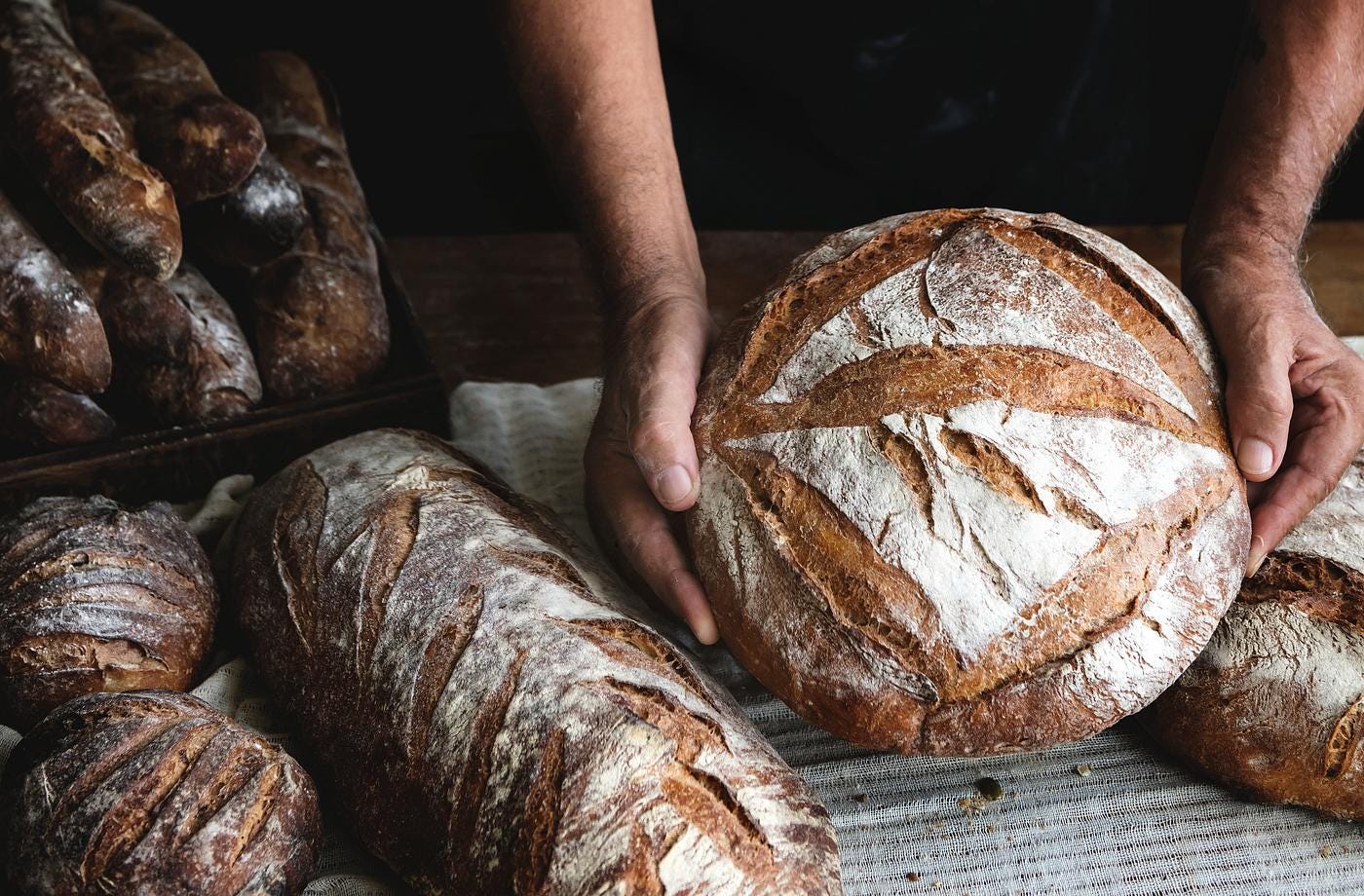
Jesus loves us so much that He invites and empowers us to share in His saving mission.
It’s His mission; it’s His power by which our salvation and transformation and freedom are accomplished. Yet He could have fed every person directly and personally Himself. Instead, he chose to work through others.
So what?
I know talking about Greek words seems academic. And we’re not here to become theologians (thank God for that); we’re here to become saints. But when we see our Gospel in this light, it takes away our excuses to avoid sharing Jesus with others, to avoid evangelizing.
Because we are tempted to think:
I can’t spread the Gospel, I can’t invite people into a relationship with Jesus, because I’m ... what?
Not smart enough?
Not an extravert?
Don’t have the time?
Don’t know enough about our faith?
You see, brothers and sisters, all of those excuses fall apart in light of our Gospel. Jesus, knowing our hesitations yet inviting us beyond them, says to us - says to you! – “You can’t do it? Good. All I need is the little bit that you have. I will multiply it in your hands. I will bring freedom to those you can’t help. I hunger to work through you to do things far beyond your abilities.”
The prophet Isaiah says it perfectly, praising the Lord for, “You have accomplished, O Lord, all that we have done.” Think about that. You have accomplished all that we have done. We really do something. But it is Jesus accomplishing His work through us.
Are we accepting this gift? Are we working to bring Jesus to those who aren’t here? Or to those who walk through the door of this church and yet have never surrendered their lives to Jesus? Every one of us knows someone wandering in the wilderness. Jesus’ plan has not changed. Just as He placed bread in the hands of the apostles, He now places His power in our hands.
That’s intimidating, no? It certainly felt so for the Twelve. Five loaves and two fish were not enough. But Jesus never asked them, or us, to be “enough”. He knows that, on our own, we are not enough. And yet He still delights – delights! – in our surprise and joy when He works miracles through our hands. He only asked his apostles to use what little they had, and He asks exactly the same thing of us.
So perhaps the question today is not whether we have enough gifts, knowledge, courage, or time. It’s simply: Am I willing to seek out opportunities to let Jesus multiply whatever little I have for the good of others - for the mission, the Great Commission, to “Go, make disciples of all nations…”?
That’s how He fed the multitude.
That’s how He built His Church.
And that is how He continues to set people free.
Jesus enters the wilderness to lead us in a new Exodus—from slavery to freedom—and longs to accomplish that liberation through you and me.