
What Satan Missed in the Desert
A Reflection for the 1st Sunday of Lent 2026
Human weakness runs through our readings on this First Sunday of Lent. It is easy to miss, not because it is well hidden, but because we can be reluctant to face our own weakness honestly. And so, little by little, we can fall into the habit of trying to cover it, escape it, or conquer it on our own terms.
Our first reading shows that original, persistent weakness that we humans tend to have: the desire to be something we are not, the desire to be God. The evil of refusing to embrace who we are in the face of who God is becomes the door through which every other sin and evil has entered the world. Our weakness as creatures is not the problem. Rather, sin begins when we refuse our creaturely dependence and grasp at what belongs to God, rathering than allowing ourselves to be in a posture of receiving what our loving Father offers. The second reading finds Paul reminding the Romans the power that original, persistent weakness has over each one of us. He reminds them that no one can free themselves from the slavery this weakness has bestowed on us.
But most importantly, it is in our Gospel where we find Jesus not fleeing from the disgust of human weakness, but stepping into the middle of it:
“He fasted for forty days and forty nights, and afterwards he was hungry.”
Even Satan, with his cunning intellect, failed to see the truth.
Often, the strength of God appears as human weakness.
It is clear that first Jesus fasted for forty days, turning His heart to His Father in intimate prayer. The passage is clear that it was only after that, when it was time to confront the world and what it offered, that Jesus was hungry. If His hunger was caused by the fast, it certainly would have started before forty days were over. You see, His fasting and His prayer did not make Him weak - they revealed where His strength truly was. The desert was not simply deprivation; it was communion. The hunger that comes after forty days does not place Him in a position of weakness to confront the world, the flesh, and the devil. It shows that He is fully human, and that His humanity is held, sustained, and nourished by His Father.
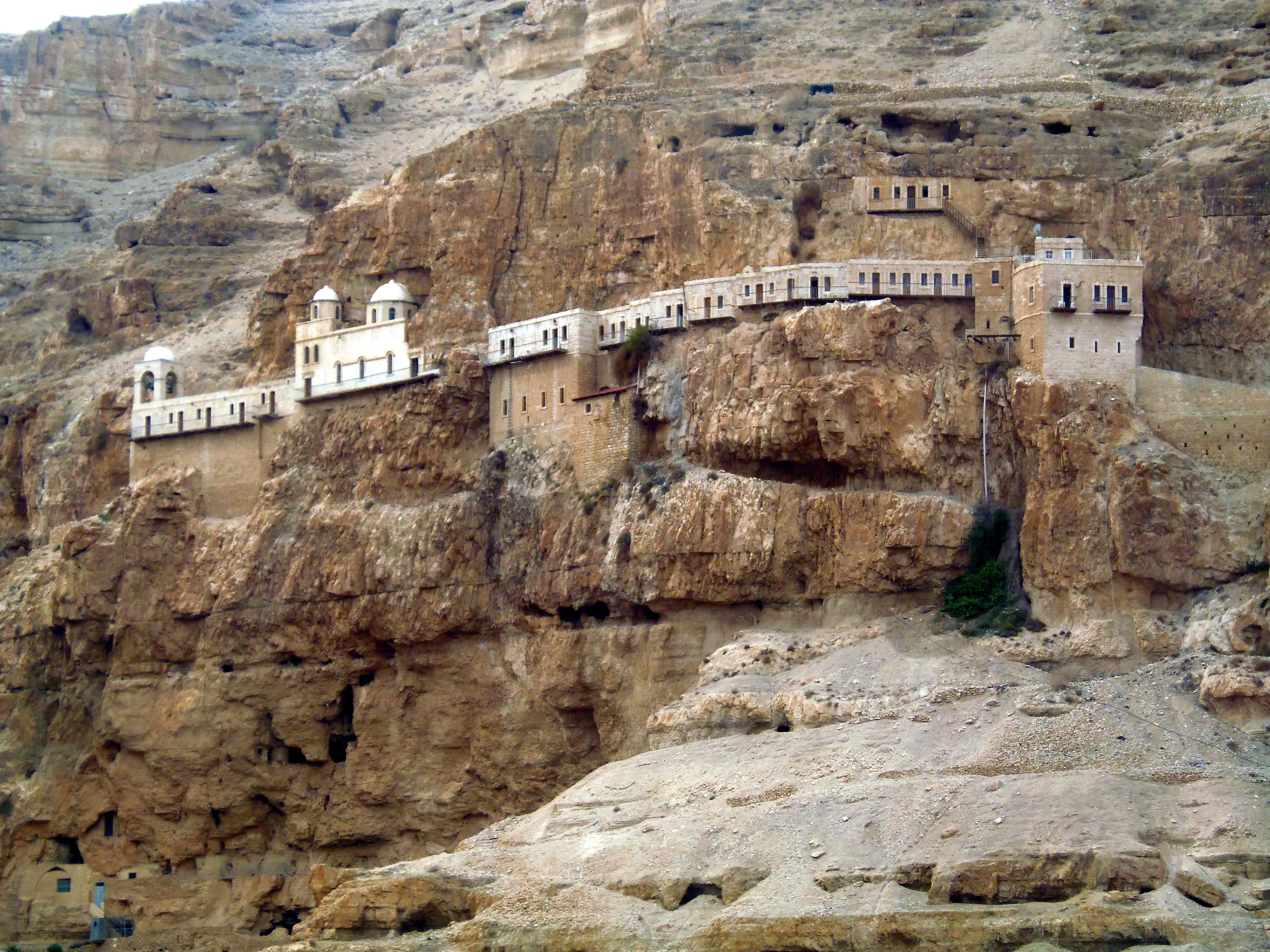
Adam, in a garden of abundance, reached out to grasp what was not given; Jesus, in a desert of emptiness, receives and remains faithful to what the Father gives. Adam distrusted the word of God and fell; Jesus is fed by His Father’s presence and stands. Where the first Adam treated creaturely dependence as something to escape, Jesus reveals it as the very place of communion and strength.
This is the step that Satan missed. Because the accuser’s assumption was that because He had fasted for forty days, Jesus was hungry; and because He was hungry, He was weak; and because He was weak, He could be easily overcome. From the perspective of the world and its king, Jesus looked weak. And so the tempter spoke with the same old lie: grasp, prove yourself, take what is yours. But Jesus refuses to grasp. He receives. He obeys. He remains a faithful Son.
It turns out that, many times, the strength of God appears as human weakness.
The saints remind us of that. Ones like St. Josephine Bakhita who, as an abused and beaten slave, exemplified human weakness, yet radiated love and forgiveness so powerfully that it revealed a freedom no chains could touch. St. André Bessette, who was seen even by some in his own Church as a fraud, yet became a miraculous channel of hope for the suffering. St. Hildegard of Bingen, who endured humiliation and opposition, including an interdict placed upon her community, yet remained steadfast in mercy and obedience.
I would suggest that this gives us a map for finding, in our world today, those who have become stewards of spiritual power. The ones who are weak are, many times, the agents of renewal that the church needs to cast off the cloak of mediocrity, protectionism, and navel-gazing that has infected it in so many places for far too long, including among us clergy. So look toward those who are most marginalized, most maligned by society and even by the Church, yet continue to love, to witness, to live in the truth that Jesus—and Jesus alone!—is what feeds their hunger and sustains their life. Those are the ones upon whom divine power rests, because our Father never hesitates to transform obedient weakness into spiritual power.
Brothers and sisters, these readings are a profound challenge for us if we confront them face-to-face. If we are honest with ourselves, we will begin to see how so much of our life, and a majority of our sins, are fruits of a desperate need to avoid confronting our limitations and weaknesses. So this Lent, choose one place of weakness you usually hide—one fear, one wound, one recurring sin, one limitation—and bring it deliberately into prayer, fasting, and if needed confession. Let Jesus meet you there, not where you pretend to be strong.
In the end, notice what happens when Jesus decisively triumphs over Satan’s will, when it is fully revealed that the weakness of His humanity is really the manifestation of divine power—nothing. There is no one there to see it other than His Father and the angels He sends. There is no awestruck audience marveling at the overturning of human wisdom. There are no worldly accolades or celebrating crowds.
Jesus triumphs in silence.
And usually, so do the saints.
So many—like Thérèse of Lisieux—aren’t even known until after their death, when the fruits of the power they wielded ripple throughout the Church. It is yet another reminder to us that rather than seeing the real agents of divine power, the real agents of renewal in the church, we will more likely experience the fruits of their faithful weakness.
So, this Lent, be weak!
Our Church desperately needs more weak saints. Because, in the hands of the Father, that “weakness” becomes the place where true victory is born.
Oh My Goodness!!! This is absolutely incredible. I got very emotional reading this Father Matt. Thank you always for sharing your insight.